
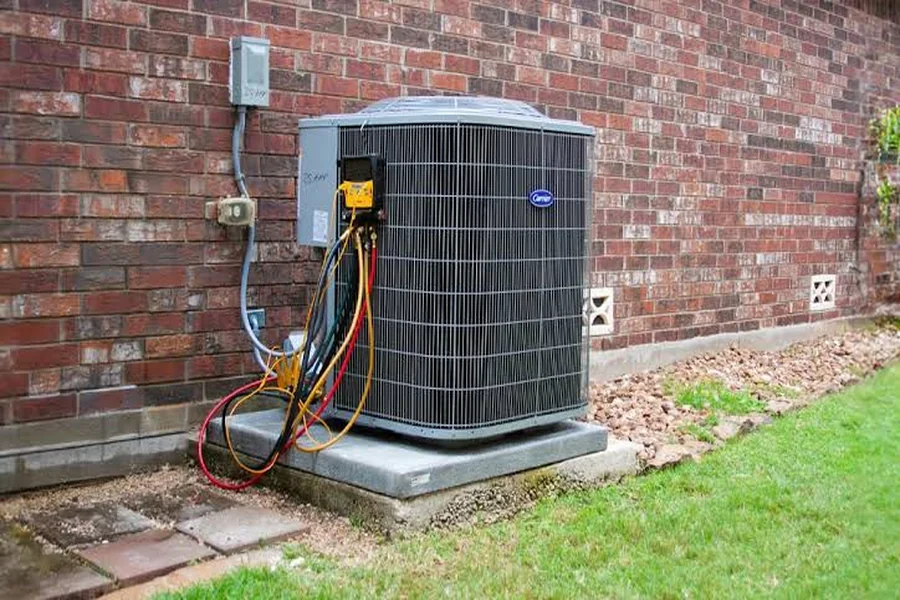
Most homeowners pick an air conditioner the way they pick a microwave: biggest one that fits, done. Then July shows up, the unit short-cycles, the upstairs never quite cools, and the electric bill climbs anyway. Sizing is the single decision that decides whether your next fifteen summers feel easy or feel like a fight with your thermostat.
Here’s what this guide does for you. It explains why tonnage matters more than brand, walks you through a quick load calculation you can sanity-check on a napkin, and gives you the exact questions to ask before anyone writes an invoice. You’ll also learn which upgrades make a smaller unit work harder, and which ones are a waste of your Saturday.
Why the Wrong Tonnage Costs You Money Twice
An air conditioner doesn’t cool a house by brute force. It pulls heat and humidity out of the air and dumps it outside, and it does that best when it runs in long, steady cycles. Oversize it and the unit blasts cold air, hits your setpoint in nine minutes, and shuts off before it ever drains the moisture out of your rooms. That’s the muggy feeling you get in a house that’s technically at 72 degrees.
Undersize it and the opposite happens. The system runs nonstop from June to September, never quite catches up on the hottest afternoons, and wears itself out years early. Both mistakes cost you the same thing in the end: a replacement you didn’t plan for. The federal government has pushed minimum efficiency standards upward for years, which means a unit built today moves more cooling per dollar of electricity than one from 2005. According to the Department of Energy, heating and cooling represent the largest single chunk of a typical American home’s energy use, which is why the sizing math matters so much more than the sticker on the box.
What Actually Goes Into a Load Calculation
A proper load calculation, sometimes called a Manual J, isn’t guesswork and it isn’t “about a ton per 500 square feet.” That old rule gets tossed around at cookouts and it’s wrong often enough to be dangerous. Real sizing looks at your house as a system:
- Square footage and ceiling height of each conditioned room, not the whole house in one number.
- Window count, size, and orientation. A west-facing picture window in August is a different animal than a north-facing one.
- Insulation and air sealing in the attic, walls, and rim joists.
- Duct condition. Leaky ducts in a 130-degree attic can dump a quarter of your cooling before it reaches a vent.
- Local design temperatures. Southern Illinois summers are not Phoenix summers, and the math should reflect that.
That last point is where national shortcuts fall apart. A unit sized for a dry, 110-degree climate fights humidity completely differently than one sized for a humid 95-degree day along the Mississippi. Professional bodies like ASHRAE publish the climate design data that competent contractors build their calculations on, and it’s worth asking whether yours used it.
The Three-Bin Method I Use to Screen a Quote
I’ve watched enough install quotes cross my desk to sort them into three bins, and it takes about four minutes.
Bin one: they measured something. Good sign. A contractor who walks the house, checks window direction, pokes their head in the attic, and asks about your last three electric bills is doing real work. You’ll usually see a written summary of what they found.
Bin two: they quoted blind. They looked at the square footage, glanced at the old unit’s label, and matched the tonnage. That’s not sizing, that’s photocopying. Sometimes the old unit was right. Often it wasn’t, because the previous owner let somebody else guess.
Bin three: they upsold “just in case.” This one’s the sneaky one. A salesman who nudges you up half a ton “for safety” is selling you a more expensive unit that will cool worse and cost more to run. Bigger is not safer.
If you’re anywhere near Granite City and you’re replacing a system that’s over a decade old, this is exactly the moment to slow down and get the sizing right, which is why a good AC Installation & Replacement in Granite City quote starts with a load calculation and not a price sheet.
When a Smaller Unit Is the Better Buy
Here’s my honest take, and it runs against how most people shop: if you’re torn between two sizes, the tighter calculation usually wins. A slightly smaller unit that runs long cycles will hold your humidity down, keep room temperatures even, and pull less power at startup. You’ll feel the difference in your bedrooms before you see it on the bill.
Variable-speed compressors changed this conversation too. Ten years ago, oversizing was a hard mistake because single-speed units only had on and off. Today, a modulating system can run at 40 percent capacity for an hour and never break a sweat, which gives you more forgiveness in the sizing. It doesn’t give you unlimited forgiveness. A two-ton load is still a two-ton load. One more thing people forget: your ducts are part of the system. A new high-efficiency condenser bolted onto undersized, leaky ductwork is a sports car on a gravel road. Fix the ducts first and a modest unit will outperform a big one every single time.
Upgrades That Change the Math
Sometimes the smartest move isn’t a different size. It’s making your house easier to cool so the size you already have works.
| Upgrade | What It Does for Sizing | Worth It? |
| Attic air sealing | Cuts the heat load before it reaches your ceiling | Almost always |
| Added attic insulation | Can drop the required tonnage on a whole-house replacement | Yes, if yours is thin |
| Duct sealing | Delivers the cooling you already paid for | Yes, especially in older homes |
| Window film or shade | Trims peak load on west-facing rooms | Situational |
| Smart thermostat | Doesn’t change load, changes runtime habits | Nice to have |
The order matters. Air sealing and insulation shrink the load. Duct work makes the delivered air match the rated air. Then you size the equipment to the improved house. Do it in that sequence and you can often buy a smaller system and get better comfort.
Regional housing stock plays a role here too. Older river towns tend to have more pre-war bungalows with less insulation than newer suburban builds, and the U.S. Census Bureau tracks how the age of the American housing stock varies block by block. A 1920s house and a 2015 house on the same street need different tonnage. Same square footage, different answer.
Your Pre-Purchase Checklist
Run through this before you sign anything:
- Ask for the load calculation in writing. If they can’t produce one, keep calling.
- Confirm they measured windows by direction, not just count.
- Get a duct inspection included in the quote, not sold as an add-on later.
- Ask what design temperature they used for your area.
- Request the efficiency rating in writing so you can compare apples to apples.
- Verify the warranty covers labor, not just parts.
- Ask what happens if the system doesn’t hold the setpoint on the hottest day of the year.
None of those questions are aggressive. Any contractor who’s done the work will be happy to answer them, and the ones who get defensive just told you something useful.
The Bottom Line
Tonnage is a measurement, not a preference. Get it right and you get even temperatures, lower humidity, and a system that lasts. Get it wrong in either direction and you pay for it every July for a decade. So before you buy, walk your house with a clipboard and count the west windows. Then ask whoever gives you a quote to show you their math. If they can, you’ve found your installer. If they can’t, you’ve saved yourself a very expensive lesson.