There is a drawer somewhere in this city holding a pair of glasses with a strap across the back, and next to it sits a bulky metal facebow from an old treatment plan. Orthodontic gear ages into costume fast. The parents who wear that gear in old photos still describe it with the same resigned tone, and their kids, who are now the patients, honestly do not understand what the fuss is about.
So here is the point of this piece: braces did not slowly polish into the modern version. They jumped at three clear turning points, and if you want to understand why tooth straightening looks the way it does now, those three moments explain almost everything. We will cover the switch to bonded brackets, the rise of clear aligners, and the timing shift that made early evaluation routine. By the end you should be able to tell the difference between tradition and current standard, and know which questions actually matter when you sit down for a consultation.
The junk drawer of orthodontic history
The modern specialty is younger than most people guess. What we now practice as a formal profession grew out of general dentistry during the early twentieth century, and it did not become a recognized specialty in the United States until much later. If you want the broad strokes of how the field separated from dentistry, the Smithsonian Institution archives are worth an evening, because the transition from wooden wedges to milled metal reads like a tool catalog turning into a science.
Step into the earlier years and the tools look aggressive. Bands came first. A band is a metal ring that circles an entire tooth, cemented in place, and before the 1970s it was the unit everything else attached to. Those bands worked, and I will not pretend otherwise. Patients wore them, treatments finished, and plenty of people got straight teeth. But every appointment meant re-cementing, flossing meant a threader and patience, and decoration meant nothing beyond color because the only thing patients saw was the ring.
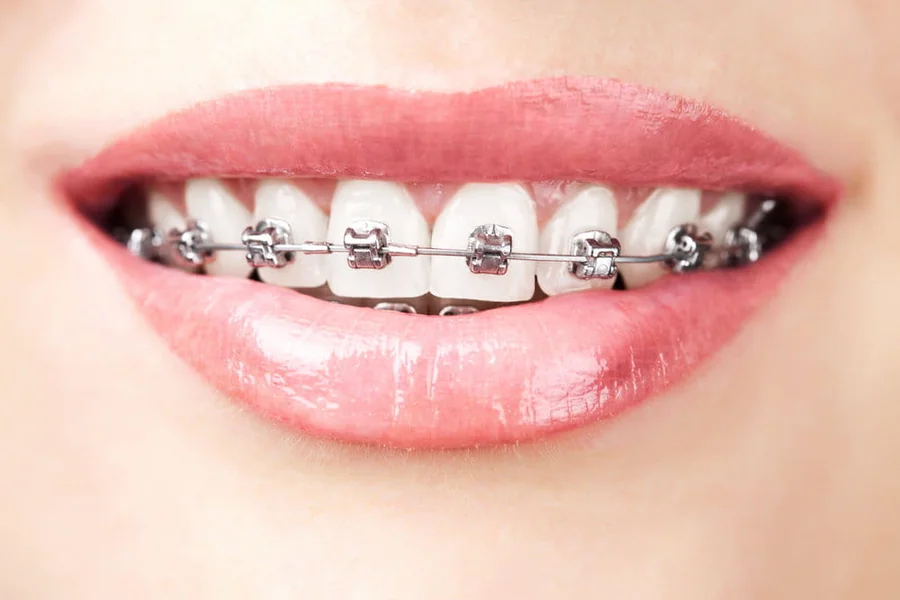
What changed the feeling of treatment was the shift toward a different concept: bonding. Bonded brackets glue to the face of the tooth, so the band falls away, and the appliance shrinks down to a small pad the size of a fingernail. That one change freed up flossing, cut down the metal in your mouth, and made color a real choice rather than a slot you filled in. It sounds like a cosmetic upgrade, and you can argue it was.
What does that old technology still get wrong?
Bonded brackets solved crowding, but they did not solve how we measure it. The second turning point is quieter and I think it matters more than the bracket itself, because it changes what a dentist or orthodontist can see before a single tooth moves anywhere.
Old treatment began with a physical mold. You bit into a tray of alginate that set like gelatin, the dentist poured it in plaster, and the result shipped off to a lab. If the impression had a bubble or a drag, the whole thing started over. The model you got back was stiff, breakable, and a copy of a copy.
Digital scanning replaced that. A wand moves across the teeth, and a full 3D model appears on screen in real time, rotatable with a trackpad, measurable to fractions of a millimeter. Not every practice uses one, and I would say the difference in the experience is underrated, because the patient can actually see the record. That model then feeds the treatment itself, not just the documentation. Which sets up the biggest change of all.
The third change: timing moved earlier
Equipment is not the only thing that shifted. When treatment starts moved too, and it happened so gradually that most families never noticed a decision being made on their behalf.
The old assumption was simple: wait until the baby teeth fall out, then hand the kid to an orthodontist. That worked up to a point. But it missed a narrow window during jaw growth when certain problems are far easier to shape than to correct later, particularly crowding and bite relationships tied to how the jaws line up.
This is why many practices now recommend an evaluation around age seven for children. That timing is a broadly followed clinical baseline rather than a sales tactic, and the American Association of Orthodontists publishes guidance built around early assessment. The visit does not automatically lead to braces. Often it leads to monitoring, a note in the chart, and a return date seven or eight. Some kids need nothing at all.
Nothing about that visit really involves the device. The device is what people remember because it is embarrassing or photogenic. The decision underneath it is about anatomy and calendar, and the calendar part is why early evaluation earned its place.
A short list if you are the one sitting in the chair now
You might be reading this as an adult. Plenty of adults are. Maybe you wore braces for years as a kid and lost the retainer in a move, or nobody ever brought you. So set the history aside and use a few things on the next consultation:
- Ask what records will be taken and why. Scans, photos, and radiographs each answer a different question, so a clear answer tells you the office thinks in systems.
- Ask how the estimate was built. Total cost, insurance portion, payment months, and what happens if treatment runs past the estimate are four separate numbers.
- Line up the retainers before anyone promises anything. Retention is the part of treatment people abandon, and it is the part that decides whether the work holds.
Then there is the question nobody asks and everyone should. How do you choose? For an adult, the daily tradeoff is simple in my opinion. Clear aligners win on brushing, eating, and photos you will see at work. Fixed brackets win on the days you forget everything, because they do not depend on you remembering a tray. I would pick aligners for a social schedule and brackets for an honest assessment of my own habits. Neither is better in the abstract.
If you are short on time, skip every sidebar and do the one thing below in bold. That is the whole practical takeaway.
Book the evaluation before you book anything else. Not the second opinion. Not the price comparison spreadsheet. The evaluation itself. A short visit with records is the only event that turns a vague idea about your smile into an actual plan with numbers on it.
Technology is not the story
Here is the part I would say if we were standing in a hallway. The digitized records and clear trays look like the story, but the real shift is that orthodontics stopped being something you did to a generation and became a decision any age can start. Adults now make up a meaningful share of people in treatment, which tracks with a broader public health shift toward seeing oral health as continuous rather than something that ends when you turn eighteen. The National Institutes of Health treats oral health as a lifelong component of general health, not a childhood box to check off. That is the change worth remembering. Not the metal. The assumption about who gets to start.
So if you have been quietly wondering whether the window has closed for you, or for a kid who aged out of the cute photo stage four years ago, ask. Someone practicing today, including an orthodontist in Cincinnati, evaluates adults in treatment plans that would have looked unusual a few decades ago, and the answer is more often available than people assume. Reach out for a consultation, get a straight answer about where you actually stand, and let the calendar stop being the reason you never asked.