
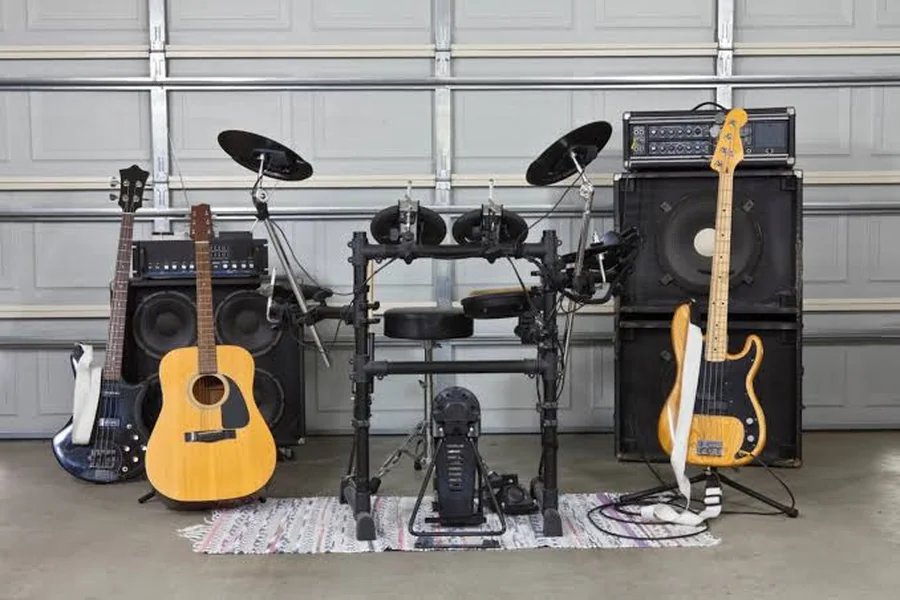
The first drum fill I played in my own garage traveled through six walls and ended up as a text message from a neighbor two doors down. That was the night I stopped guessing and started treating the garage like an instrument. It has the best floor in the house for lifting, and it’s the only room where a drum kit, a squat rack, and a paint sprayer can all live without anyone tripping. The problem is that a garage was built to let air move, not sound.
You can fix that. Quiet a garage and you get two things at once, a room you’ll actually use and fewer awkward driveway conversations. Most of the work comes down to three leaks: the overhead door, the shared wall, and the gaps around the frame. Deal with those and the difference is immediate. I’ve done this in a two car attached garage now, and I’d fix a rattling door before I’d buy a single acoustic panel. When the door itself is the noise, a call to a crew like Balanced Garage Doors in Alpharetta, GA sorts out rollers, tracks, and springs fast, which is where I’d start if your door clangs on its own.
Everything below assumes you’re keeping the garage as a garage. You still park in it, you still open the door when you leave, and you just want it to stop broadcasting. That’s a solvable problem, and it’s a lot cheaper than adding a room.
What’s actually letting sound out
Sound escapes a garage through air, not through the wall itself. A hollow steel door with a row of thin panels is a giant drumhead, and every gap around it is a speaker port. That’s why your noise problem feels bigger than the square footage suggests. Fix the air paths first, then worry about the surfaces.
Walk your garage at night with a work light and look for daylight. Anywhere you see light, sound is walking out ahead of it. On an attached garage, the wall shared with the house matters most because that’s where sound reaches bedrooms. If you’re tightening that wall, it’s worth knowing how the rest of a home envelope is built for control, since the principles carry straight over. The U.S. Department of Energy publishes plain guidance on building envelope sealing, and the logic of stopping air movement applies to noise just as well.
Fixing the door first
Before you spend a dollar on acoustic material, listen to the door. Push it a few inches up and let it sit, then open and close it slowly. You’re listening for metal on metal, wobble in the track, and that hollow boom when it lands. Those are mechanical problems, and no amount of foam fixes them. Rollers wear out, tracks go out of plumb, and springs lose tension over years of use, all of which turns a normal door into a percussion instrument.
A door that moves quietly is the base layer of your sound control. A door that slams is a problem you’ll hear in every room of the house.
Once the door runs clean, two upgrades do most of the work:
- Weatherstripping and a bottom seal. Replace the rubber along the sides and the threshold strip under the door if it’s flattened. This closes the biggest air gap in the room.
- Backer rod plus a foam or rubber panel. Push foam rod into the gap between the door and the frame, then add a removable panel to the door’s interior face. Keep it light, because door weight affects the springs.
That second one has a limit. A steel door with a thin skin and no insulation will only ever get so quiet, and loading it with heavy material makes the opener work harder. If your door has no insulation and you’re serious about the room, replacing the door is a better spend than stacking foam on a hollow panel. I’d take that trade every time.
Quieting the room around it
Seal the shared wall, then add mass
Sound gets through a shared wall by vibrating it. Adding mass to the wall slows that vibration, and sealing the outlets and gaps around it removes the shortcuts. Caulk around electrical boxes, seal the base of the wall, and close any gap where the wall meets the ceiling.
For extra mass, mineral wool batts in the stud cavities and a second layer of drywall work well together. If you’re pulling the wall open anyway, this is the moment to do it, because you won’t want to open it twice.
Absorb the reflections you can hear
Bare concrete floors and block walls bounce sound around, which makes the room loud on the inside even before it leaks out. A rug or rubber gym flooring plus a couple of absorbing panels on the long walls most affected by that harsh reflection will calm the room down.
Don’t cover every surface. You want it controlled, not dead, especially if you’re playing an instrument in there. Too much absorption and the room starts to feel strange to work in. Two to four panels on the worst surfaces is usually the sweet spot.
Watch the ceiling
If there’s a living space above the garage, the ceiling is a major path. Sealing and adding mass above the ceiling joists, or using resilient clips or channels if you’re opening it up, makes a real difference. It’s the part people skip, and it’s usually the reason sound still lands overhead.
A quick afternoon checklist
You can knock out the first four in a single afternoon, and most of the noise goes with them. Start with the door, since a hard slam sends a shock through the frame that no insulation stops.
- Replace the bottom seal and side weatherstripping on the overhead door.
- Seal gaps around electrical outlets, the base of the shared wall, and the wall to ceiling joint.
- Seal around any door, window, or service opening into the garage.
- Tighten the door hardware. Handles, hinges, and tracks all loosen over time.
- Add mass to the shared wall and ceiling when you’re ready for the bigger project.
What to buy, and what to skip
Skip the egg crate foam. It stops nothing and looks like a dorm room. Buy weatherstripping, sealant, mineral wool, and a couple of real absorbing panels instead. That order gets you the most quiet for the least money, and it’s the order I’d use again.
If the garage door still rattles after all of this, the problem sits in the hardware, not the acoustics. Putting a new seal on a door with worn rollers means you’ve sealed the edges and left the noise. Fix the machine, then the room.
Set a target before you start. For most people, going from “neighbors text me” to “I can practice until nine with the door closed” is the whole goal. You don’t need a studio. You need a garage that behaves.
Once the door runs quiet, you may notice how much of the racket was never the drums. It was the door slamming on its way down.
Which leak are you fixing first, the door or the shared wall? If you’re opening the wall, do the ceiling at the same time, because one weekend of dust beats two.