
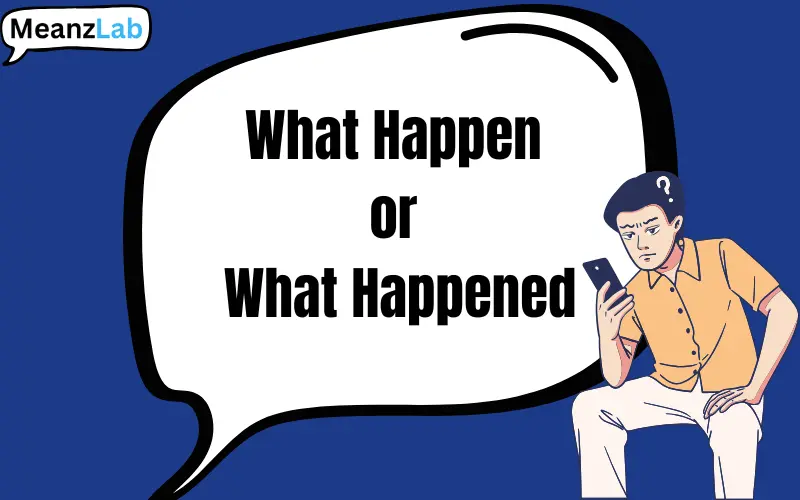
Have you ever stopped while typing a sentence and thought, “Should I write what happen or what happened?” You are not alone. This is a very common English question, especially for learners and people who use English online.
Both phrases look very similar. Only one word changes. But the meaning and correctness can change completely. Many people use the wrong form without knowing it. This article will explain everything in a very simple way so you never feel confused again.
By the end of this guide, you will clearly understand:
- Which one is correct
- When to use what happened
- Why what happen is often wrong
- Easy rules you can remember forever
- Many clear examples from daily life and texting
Let’s start from the basics.
What Does “What Happened” Mean?
What happened is a correct and complete English question.
It is used when you ask about something that already took place in the past.
In simple words, you use what happened when:
- Something already occurred
- You are asking about an event that is finished
- You want to know details about the past
Simple examples:
- What happened at school today?
- I saw you were upset. What happened?
- What happened after the meeting?
- Can you tell me what happened last night?
In all these sentences, the event already happened before you asked the question.
That is why “happened” is used.
Why “What Happened” Is Grammatically Correct
To understand this clearly, let’s break it down.
The word happened is the past tense of the verb happen.
English grammar rule (very simple):
- Past event → use past tense
- Present event → use present tense
Since the question talks about the past, happened is the correct form.
So:
✔ What happened → correct
❌ What happen → incorrect (in most cases)
What Does “What Happen” Mean?
Now let’s talk about what happen.
On its own, what happen is usually not correct English.
Why?
Because happen is the base form of the verb. When asking about the past, English does not allow the base form like this.
Example:
❌ What happen yesterday?
This sentence sounds broken and incorrect.
The correct version is:
✔ What happened yesterday?
So, in normal English conversation, “what happen” is wrong.
Is “What Happen” Ever Correct?
This is an important question.
In standard English, “what happen” is almost never correct as a full question.
However, you may still see or hear it online, especially:
- In casual chats
- In non-native English texting
- In broken or informal English
For example:
- “Hey, what happen to you?”
- “What happen here?”
These sentences are very common online, but they are grammatically incorrect.
People understand them, but that does not make them correct English.
What Happen vs What Happened (Clear Difference)
Let’s compare both phrases in a very easy way.
What happened
- Correct English
- Used for past events
- Accepted in speaking and writing
- Used in exams, emails, articles, and professional English
What happen
- Incorrect in standard English
- Often used by mistake
- Common in casual or broken English
- Not recommended in writing or speaking properly
So if you ever feel confused, always choose what happened.
Why Do People Get Confused Between These Two?
This confusion happens for a few simple reasons.
First, many learners translate English directly from their native language. In some languages, verbs do not change much, so “happen” feels natural.
Second, on social media and texting apps, grammar rules are often ignored. People type fast and do not care about tense.
Third, English past tense rules feel confusing at the beginning. Words like “happen” and “happened” look very similar, which adds to the confusion.
But once you understand the rule, it becomes very easy.
Simple Rule to Remember (Very Important)
Here is a one-line rule you can remember forever:
👉 If you are asking about the past, always use “what happened.”
That’s it. No long grammar rules needed.
Examples From Daily Life
Let’s look at more simple examples from real life situations.
You see your friend crying:
- ✔ What happened?
- ❌ What happen?
You missed a class:
- ✔ What happened in class today?
- ❌ What happen in class today?
Something went wrong:
- ✔ What happened to the computer?
- ❌ What happen to the computer?
In every case, what happened sounds natural and correct.
Examples in Texting and Online Chat
In texting, people often write wrong English. But you should still know what is correct.
Correct texting:
- “Hey, what happened? You stopped replying.”
- “What happened to your account?”
- “I heard something bad happened. What happened exactly?”
Incorrect but common texting:
- “What happen bro?”
- “What happen to you?”
Even if you see these messages online, remember they are informal and incorrect.
What About Questions Like “What Will Happen?”
You might wonder about this.
What will happen is different.
This sentence talks about the future, not the past.
Examples:
- What will happen if it rains?
- What will happen next?
- Do you know what will happen tomorrow?
Here, “happen” is correct because:
- “Will” already shows future tense
- The verb stays in base form
So:
✔ What will happen → correct
✔ What happened → correct
❌ What happen → incorrect (alone)
Common Mistakes People Make
Many learners make these mistakes again and again.
They say:
- What happen yesterday?
- What happen last night?
- What happen to your phone?
All of these are incorrect because:
- Yesterday
- Last night
- Already happened events
The correct form is always:
- What happened yesterday?
- What happened last night?
- What happened to your phone?
Comparison Table (Very Simple)
| Phrase | Correct or Not | When to Use |
| What happened | ✅ Correct | Past events |
| What happen | ❌ Incorrect | Avoid using |
| What will happen | ✅ Correct | Future events |
This table alone can clear most confusion.
Why Using Correct Grammar Matters
Some people think grammar does not matter because everyone understands them anyway.
But correct grammar:
- Makes you sound confident
- Helps in exams and interviews
- Improves writing quality
- Builds trust with readers
- Helps Google understand your content better
If you want to improve your English step by step, fixing small mistakes like this is very important.
How to Practice This Easily
You can practice this rule in a simple way.
Whenever you think of the word happen, ask yourself:
- Is this about the past?
- Is it already finished?
If yes → use happened
With time, this will become automatic.
Quick Check Quiz (In Your Head)
Choose the correct one:
- ___ at the party last night?
- What happen
- What happened ✅
- What happen
- Do you know what ___ next?
- happen
- happened
- will happen ✅
- happen
- I heard something bad ___. What ___?
- happened, happened ✅
If you chose these, you understand it well.
See Also: Smooth or Smoothe? Learn the Correct Word in Simple English
FAQs
Is “what happen” correct English?
No. It is usually incorrect and should be avoided in proper English.
Which one should I use in exams?
Always use what happened.
Why do people still use “what happen”?
Because of informal texting, fast typing, and lack of grammar knowledge.
Is “what happened” past tense?
Yes. “Happened” is the past tense of “happen.”
Can native speakers say “what happen”?
Native speakers rarely say it unless joking or typing casually.
What is the safest option?
Always use what happened.
Conclusion
The confusion between what happen or what happened is very common, but the solution is very simple.
What happened is correct English and should be used when talking about the past.
What happen is usually incorrect and should be avoided.
If you remember just one thing, remember this:
👉 Past event = what happened
Once you follow this rule, your English will sound clearer, more natural, and more confident.
You now know the correct usage — and you won’t make this mistake again. ✅