
People often fail to pay attention to their health due to their everyday work and take on significant work-related stress, resulting in neck and shoulder pain.
Not only work-related factors, neck pain can also lead to an injury sustained while performing a task, lifting heavy objects, remaining bent over for extended periods, or sleeping in an awkward position.
In the end injury leaves your neck feeling incredibly stiff, painful and hard to move.
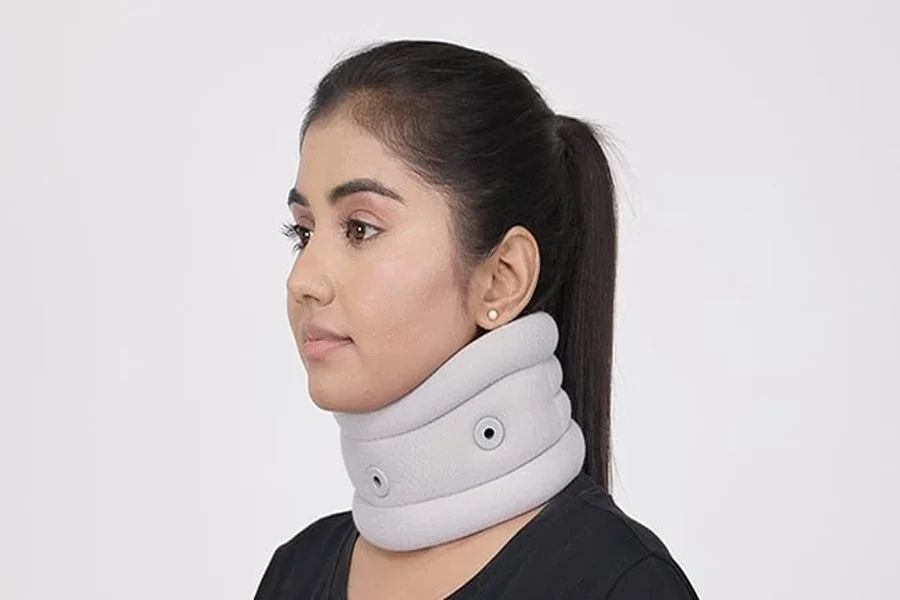
For immediate relief, many people use an orthopedic cervical collar. For decades, the standard medical approach for the neck injuries was the use of soft foam collars.
However, modern medicine has completely transformed our perspective on this recovery tool.
Knowing exactly how a whiplash collar aids your healing process, while simultaneously understanding its strict limitations, is of primary importance for your healing to occur swiftly, completely, and efficiently.
Understanding the Anatomy of Whiplash
To understand how a cervical collar helps, it is first essential to understand what happens inside your neck during a whiplash incident.
This segment of spine contains seven small vertebrae that fit together nicely, with special discs between them to make for easy gliding between each vertebra and a massive web of muscles, tendons, and ligaments.
When a whiplash injury takes place, these soft tissues are pushed far past their normal physiological limits. Muscles pull and strain, ligaments stretch or microscopically tear, and local nerves become highly irritated.
Severe inflammation sets in, and the neck muscles go into intense, painful spasms. This reaction is the body’s natural defense mechanism to prevent you from moving your head and causing further damage. This initial acute phase is where a cervical collar plays its most critical role.
How a Cervical Collar Aids the Acute Recovery Phase?
In the first 24 to 72 hours in whiplash injury, pain and muscle guarding are typically at their peak. When you use it correctly under medical supervision, a soft cervical collar offers various distinct therapeutic benefits during this brief window.
1. Offloading the Weight of the Head: Under normal circumstances, your neck muscles and cervical spine easily handle this load. But if that tissue gets stretched and torn, lifting up your head will be painful.
A soft collar works as a temporary shelf that absorbs a portion of that structural weight and transfers it down to your shoulders. This immediate offloading allows the exhausted, spasming neck muscles to finally rest.
2. Restricting Extreme Ranges of Motion: If your neck is not stable or inflamed any quick motions can result in further irritation to the injury. This orthopedic aid words as a physical barrier.
This neck collar does not fully immobilize the spine, it significantly restricts excessive movement. It prevents you from jerking your head suddenly when startled, turning your head too quickly or tilting your neck awkwardly.
3. Breaking the Pain-Spasm Cycle: If the muscle becomes injured this causes a spasm or violently contracts around the injury as part of the healing process. This spasm restricts local blood flow, leading to increased pain.
The increased pain then triggers further spasms. Here a cervical collar can help to break that cycle. It provides external support and warmth to the neck and encourages tense muscles to gradually relax.
4. Ensuring Necessary Rest and Daily Tasks: Getting proper rest or managing basic routine tasks can feel impossible when every micro-movement of your head causes a shooting pain.
Here using a collar temporarily during the day can provide enough comfort to help you navigate the toughest early hours of your recovery without constantly re-triggering severe pain.
Implementing a Safe Whiplash Recovery Plan
Use of the neck belt should adhere to the general recovery framework outlined below to maximise benefit whilst avoiding overuse:
1. The 72-Hour Rule: If your doctor has recommended the use of a soft collar, view it as a temporary crisis management tool. Apply especially during the first 2 to 3 days when the pain is particularly difficult to control. Aim should be on taking the cervical collar off while resting and wearing it only when absolutely necessary during light activities.
2. Transition to Early Active Mobilisation: As soon as the sharp, blinding pain begins to subside, it is time to move around. Nowadays modern whiplash management favors early active recovery. It gently controls movement, stimulates blood flow, reduces stiffness and ensures that healing scar tissue lays down in a flexible, functional pattern rather than a tight, restrictive knot.
3. Partner with a Professional: Every whiplash injury is classified by grade, ranging from mild tissue stretching (Grade 1) to injuries involving neurological deficits or disc damage (Grade 3). For better knowledge work directly with a physiotherapist or spine specialist. They can help provide you with safe, progressive, pain-free exercises,like gentle chin tucks, controlled side-to-side rotations, and shoulder blade retractions to restore your neck’s natural strength and flexibility.
Key Takeaways
The cervical collar is a tremendously important and very useful specific tool to make whiplash more bearable in the early acute phases. It carries the sheer physical weight of your head while stopping sudden impacts and motions that could be damaging so the badly injured muscles and ligaments have peace to begin mending.
Always remember that a soft cervical collar is a temporary measure, not a permanent solution.
For a full and lasting recovery from whiplash, restore movement, rebuild muscle strength and regain flexibility through active rehabilitation right from the early stages.
Consult your doctor which balance of essential short-term rest and important activity your body needs for a real recovery to promote healing.