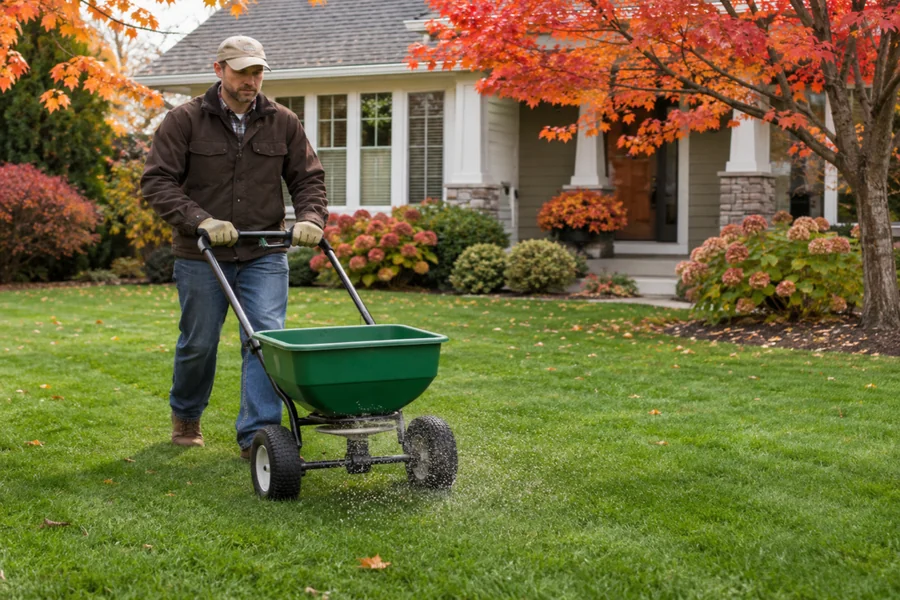
Summer leaves its mark on most lawns. Months of heat, foot traffic, and uneven rainfall can thin out turf, compact the soil, and open the door for weeds to settle in. A few targeted tasks before winter arrives can put the yard in a much stronger position when growing conditions return in spring.
Fall is genuinely one of the most productive seasons for lawn work. Cooler temperatures reduce stress on the grass, soil moisture tends to improve, and repairs take hold more reliably than they would in the heat of July. Here is what to focus on.
Check Your Lawn for Damage and Weak Areas
Start with a slow walk across the entire yard. Look for bare patches, thinning sections, areas where water pools after rain, and spots where the soil feels firm underfoot. Weeds clustered in one corner often signal a soil or drainage issue rather than random bad luck.
Treating the whole lawn the same way wastes both time and product. Identifying the spots that need attention allows for more focused repairs that actually address the underlying problem. And a small bare patch caught in October or November is far easier to fix than the same patch after a winter of weed colonization.
Give Your Grass a Proper Mowing and Cleaning Routine
Fallen leaves look harmless, but they can cause real problems if left unmanaged. According to Iowa State University Extension and Outreach, layers of fallen leaves block out light and smother plants, which can kill them. Leaf debris prevents turfgrass from manufacturing and storing food before winter, leaving behind patchy areas of dead grass that are more prone to weeds.
Keep Mowing Until Growth Stops
Continue mowing while the grass is still actively growing. Stopping too early allows the turf to go into winter longer than ideal, which can lead to matting and disease. Cutting the grass too short in a single pass has the opposite problem, stressing the root system at a time when it needs to be storing energy.
Clear Debris Beyond Just Leaves
Branches, garden furniture, and other objects sitting on the grass for weeks at a time can damage or kill the turf beneath them. A clean yard surface going into winter gives the grass the best possible chance to stay intact.
Improve Soil Conditions Before Winter
Compacted soil is one of the most common and overlooked reasons a lawn struggles. When soil is dense, water runs off the surface rather than soaking in, fertilizer cannot reach the root zone, and roots stay shallow. The whole system stalls.
Core Aeration
Core aeration removes small plugs of soil from the lawn, creating channels for air, water, and nutrients to move more freely. It is especially useful in yards that see regular foot traffic, have heavy clay soil, or have not been aerated in a year or two. Fall is a practical window for this because cooler temperatures allow the grass to recover quickly after the process.
Overseeding Thin Areas
After aerating, overseeding can help fill in sections where the turf has thinned. The open channels created by the aerator give seed better contact with the soil and improve germination rates. Timing matters here: grass seed needs soil warm enough to germinate, so earlier in fall is generally better than waiting until temperatures drop.
Repair Bare Patches and Consider Fresh Sod
Bare patches left unattended through winter tend to become weed patches by spring. Addressing them in fall, even partially, reduces that risk.
Small areas can often be repaired with seed, provided there is enough time in the season for germination and some establishment before the first frost. Larger or more damaged sections may benefit from sod, which provides immediate coverage and a more predictable result.
For homeowners in warm-climate states such as Texas, Arizona, Georgia, and California who want to replace or establish new turf, TifTuf Bermuda grass is worth considering because it has superior drought and wear tolerance. The Federal Specialty Crop Research Initiative identified it as the most drought-tolerant bermudagrass, and further testing showed it uses 38% less water than Tifway while maintaining better turf quality.
Because Bermuda is a warm-season variety, installation timing matters. In areas with cold winters, laying sod during the active growing season beats doing it just before dormancy. Homeowners should weigh their local climate and existing grass type before committing to new sod.
Apply the Right Fertilizer for the Season
Grass has different nutritional needs in fall compared with the warmer months. Cool-season grasses are often actively recovering from summer stress and can benefit from a fall feeding that supports root development and helps the plant store energy for winter. Warm-season grasses, by contrast, generally do not need fertilizer late in the season. Applying it too close to dormancy can cause more harm than good.
Follow product instructions carefully and consider getting a basic soil test if the lawn has had persistent problems. Applying the wrong product, or the right product at the wrong time, can damage the turf rather than help it.
Keep Weeds and Other Lawn Problems Under Control
Some weeds are most active in fall, not spring. Winter annuals germinate in late summer to early fall, grow through fall and winter warm spells, and set seed in mid- to late spring just before daytime temperatures jump. Common examples include henbit, chickweed, and annual bluegrass. Treating these in fall, before they have a chance to establish, is far more effective than chasing them in spring.
When selecting weed control products, match the product to the grass variety and the specific weed present. Some herbicides are not appropriate for all turf types, and applying a pre-emergent at the wrong time can interfere with overseeding efforts.
Also check for signs of pests, unusual discoloration, or circular patterns in the turf that might point to disease. Catching these early reduces the recovery work needed when spring arrives.
Prepare Your Lawn for Cold Weather
Once the grass slows down and temperatures drop consistently, shift from active treatment to basic protection.
- Remove garden furniture, children’s play equipment, and any other objects resting on the turf.
- Clear any remaining leaf accumulation before the first hard freeze.
- Avoid walking on the lawn repeatedly when the ground is saturated or frozen, as this compacts soil and damages grass crowns.
- Hold off on fertilizer or chemical treatments once the grass has stopped actively growing.
The goal at this stage is to avoid adding new problems rather than trying to fix existing ones.
The Takeaway
A lawn that enters winter in reasonable condition is far easier to work with come spring. Inspecting for damage, managing leaves, aerating compacted areas, addressing bare patches, and timing fertilizer correctly are all tasks that pay dividends months later.
Consistent seasonal attention, done at the right time and with the right approach for your specific grass type, makes the difference between a lawn that struggles each year and one that steadily improves.