
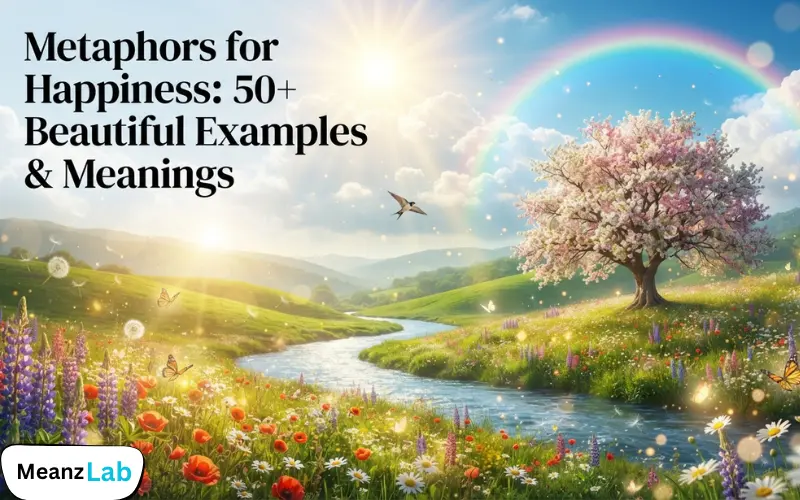
Metaphors for happiness are creative expressions that describe joy by comparing it directly to something else without using words like “like” or “as.” Instead of simply saying someone is happy, you might say “Happiness is sunshine,” “Happiness is a blooming garden,” or “Happiness is a bird soaring through the sky.” These metaphors make emotions more vivid, memorable, and meaningful in writing and everyday conversation.
Happiness is one of the most uplifting emotions people experience, yet describing it with ordinary words can sometimes feel limiting. Words such as happy, joyful, or excited tell us how someone feels, but they rarely capture the full depth of that emotion.
That’s where metaphors become powerful.
A metaphor transforms an abstract feeling into a vivid image. Instead of explaining happiness directly, it allows readers to picture it through something familiar—a sunrise, a blooming flower, a gentle breeze, or a soaring bird. These images create stronger emotional connections and make writing more engaging.
Writers, poets, novelists, and songwriters have relied on metaphors for centuries because they bring emotions to life. Even in everyday conversations, people naturally use metaphorical expressions such as “I’m walking on sunshine” or “My heart is dancing.”
Whether you’re writing a poem, speech, story, greeting card, or social media caption, choosing the right metaphor can make your words far more expressive.
In this guide, you’ll discover what metaphors for happiness are, why they work so well, and more than 50 inspiring metaphors with meanings and practical examples.
What Are Metaphors for Happiness?
A metaphor is a figure of speech that directly compares one thing with another to highlight shared qualities.
When discussing happiness, metaphors compare joy to objects, places, experiences, or natural elements that represent positivity, warmth, hope, or freedom.
For example:
- Happiness is sunshine.
- Happiness is a rainbow.
- Happiness is a blooming flower.
- Happiness is a soaring eagle.
- Happiness is a melody.
None of these statements are literally true. Instead, they help readers visualize what happiness feels like through familiar images.
The result is more engaging and emotionally powerful writing.
Why Writers Use Happiness Metaphors
Happiness is deeply personal, making it difficult to describe with ordinary vocabulary.
Metaphors solve this problem by turning invisible emotions into visible images.
Writers use happiness metaphors because they:
- Create stronger emotional connections.
- Make stories more memorable.
- Add beauty to poetry.
- Improve speeches and presentations.
- Make greeting cards more heartfelt.
- Bring life to novels and short stories.
- Enhance creative writing.
Whether you’re writing professionally or simply expressing your feelings, metaphors allow happiness to feel more real.
Classic Metaphors for Happiness
Some metaphors have remained popular for generations because they beautifully express universal feelings of joy.
Happiness Is Sunshine
Sunshine symbolizes warmth, hope, and brightness.
Example:
“Her smile was sunshine after weeks of rain.”
Happiness Is a Rainbow
A rainbow appears after storms, making it a symbol of hope and renewal.
Example:
“Their reunion became the rainbow after years apart.”
Happiness Is a Blooming Garden
Gardens represent growth, beauty, and new beginnings.
Example:
“His heart became a blooming garden filled with gratitude.”
Happiness Is a Bird in Flight
Birds represent freedom, possibility, and limitless joy.
Example:
“Her happiness soared like an eagle above the mountains.”
Happiness Is a Melody
Music often captures emotions more deeply than words.
Example:
“Their laughter became the sweetest melody in the room.”
Happiness Is a Sunrise
Every sunrise represents a fresh beginning.
Example:
“The birth of their daughter felt like watching the first sunrise.”
Happiness Is a Spark
Small moments of joy often ignite something much larger.
Example:
“One compliment became the spark that brightened his entire day.”
Happiness Is a Lighthouse
Even during difficult times, happiness can guide people toward hope.
Example:
“Her optimism remained the lighthouse for everyone around her.”
Happiness Is a River
Joy often flows naturally when life is balanced.
Example:
“Contentment flowed through his life like a peaceful river.”
Happiness Is a Butterfly
Butterflies symbolize beauty, freedom, and transformation.
Example:
“Joy landed gently on her heart like a butterfly.”
Nature-Inspired Metaphors for Happiness
Nature offers endless inspiration for expressing positive emotions.
Happiness Is a Blooming Flower
Flowers represent beauty, hope, and personal growth.
Example:
“Confidence allowed happiness to bloom like a spring flower.”
Happiness Is the Ocean Breeze
A cool breeze brings calmness and refreshment.
Example:
“His laughter felt like an ocean breeze after a stressful week.”
Happiness Is a Mountain View
Standing at the top of a mountain often brings peace and accomplishment.
Example:
“Graduation felt like reaching the highest mountain peak.”
Happiness Is the Morning Dew
Morning dew represents freshness and new possibilities.
Example:
“Every new opportunity arrived like fresh morning dew.”
Happiness Is the Stars
Stars remind us that beauty exists even in darkness.
Example:
“Hope filled her heart like stars across the night sky.”
Happiness Is a Gentle Rain
Rain nourishes life and helps new growth begin.
Example:
“Kindness became the gentle rain that refreshed everyone around him.”
Happiness Is Spring
Spring symbolizes renewal and fresh beginnings.
Example:
“Their friendship brought spring back into his life.”
Happiness Is the Blue Sky
A clear sky often represents peace and endless opportunities.
Example:
“Her future looked as bright as an endless blue sky.”
Happiness Is a Shining Star
Stars inspire wonder and optimism.
Example:
“Winning the award made him feel like the brightest star.”
Happiness Is a Fruitful Tree
Trees produce fruit through patience and care.
Likewise, happiness often grows through gratitude and meaningful relationships.
Modern Metaphors for Happiness
Modern life has inspired new ways of expressing joyful emotions.
| Metaphor | Meaning |
| Happiness is Wi-Fi | It keeps people connected. |
| Happiness is a Playlist | Every moment has its own joyful memory. |
| Happiness is a Battery | It recharges your energy. |
| Happiness is a Passport | It opens new experiences. |
| Happiness is a Firework | Bright, exciting, and unforgettable. |
| Happiness is a Cup of Coffee | Comfort during ordinary moments. |
| Happiness is a Road Trip | Enjoying both the journey and destination. |
| Happiness is a Smile | Simple yet powerful. |
| Happiness is a Treasure Chest | Filled with valuable memories. |
| Happiness is a Window | Opening new possibilities and perspectives. |
These modern metaphors connect traditional emotions with experiences that feel familiar in today’s world.
Deep Emotional Metaphors for Happiness
Some metaphors capture not only the feeling of joy but also the emotional transformation that happiness can bring. These comparisons are especially useful in stories, speeches, personal journals, and heartfelt messages.
Happiness Is a Warm Blanket
A warm blanket represents comfort, security, and peace.
Example:
“After years of uncertainty, her family became the warm blanket that wrapped her in happiness.”
Happiness Is a Golden Key
A key opens doors to new opportunities and experiences.
Example:
“Gratitude became the golden key that unlocked lasting happiness.”
Happiness Is a Beacon
A beacon shines through darkness and provides direction.
Example:
“His positive attitude became a beacon for everyone around him.”
Happiness Is a Gentle Wave
A wave moves naturally and peacefully without force.
Example:
“A quiet afternoon with friends washed over her like a gentle wave of happiness.”
Happiness Is a Campfire
A campfire brings warmth, comfort, and togetherness.
Example:
“Family dinners became the campfire that kept everyone’s happiness alive.”
Happiness Is a Balloon
A balloon rises effortlessly into the sky.
Example:
“Receiving the good news made his spirit float like a bright balloon.”
Happiness Is a Garden Path
A peaceful path symbolizes a fulfilling and meaningful journey.
Example:
“Every small success became another step along the garden path of happiness.”
Happiness Is a Diamond
Diamonds symbolize lasting value and brilliance.
Example:
“True friendships became the diamonds in her life.”
Happiness Is a Symphony
Every joyful moment contributes to a beautiful life, just as every instrument contributes to an orchestra.
Example:
“Their shared memories formed a symphony of happiness.”
Happiness Is a Lighthouse
Even during difficult times, hope and joy can guide us toward brighter days.
Example:
“His optimism remained the lighthouse during life’s storms.”
Literary Metaphors for Happiness
Writers often use elegant metaphors to make joyful emotions more memorable.
Some timeless examples include:
- Happiness is a sunrise after the storm.
- Happiness is a window opening to endless possibilities.
- Happiness is a fountain that never runs dry.
- Happiness is a feather floating on the breeze.
- Happiness is a candle lighting another candle.
- Happiness is a bridge connecting hearts.
- Happiness is a treasure hidden in ordinary moments.
- Happiness is a book filled with unforgettable chapters.
- Happiness is a river that never stops flowing.
- Happiness is the song your heart never forgets.
These expressions create vivid mental images while allowing readers to connect emotionally with the message.
How to Choose the Right Happiness Metaphor
The best metaphor depends on the emotion you want to communicate.
For Hope
Choose symbols such as:
- Sunrise
- Rainbow
- Lighthouse
- Stars
These metaphors emphasize optimism and new beginnings.
For Inner Peace
Consider metaphors like:
- Calm river
- Gentle breeze
- Warm blanket
- Blue sky
These comparisons create feelings of comfort and relaxation.
For Excitement
Energetic metaphors work well.
Examples include:
- Fireworks
- Dancing flame
- Flying bird
- Balloon
- Spark
They communicate enthusiasm and celebration.
For Long-Term Happiness
Use symbols that represent growth and stability.
Examples include:
- Garden
- Tree
- Mountain
- Ocean
- Home
These metaphors suggest lasting joy rather than temporary excitement.
Common Mistakes When Using Happiness Metaphors
Metaphors are most effective when they feel natural and meaningful.
Here are a few mistakes to avoid.
Using Too Many Metaphors Together
Combining several unrelated metaphors in one sentence can confuse readers.
Less Effective:
“Happiness is a bird, a rainbow, a river, and a star all at once.”
Better:
“Happiness is a rainbow that appears after every storm.”
Choosing Clichés Without Adding Meaning
Some expressions have been used so frequently that they may feel predictable.
Whenever possible, personalize the metaphor with your own experiences or writing style.
Ignoring Your Audience
A metaphor that works well in poetry may not fit a business presentation or academic paper.
Choose comparisons that match your purpose and readers.
Similes vs. Metaphors for Happiness
People often confuse similes with metaphors.
Although both compare ideas, they work differently.
| Feature | Metaphor | Simile |
| Comparison | Direct | Uses like or as |
| Example | Happiness is sunshine. | Happiness is like sunshine. |
| Writing Style | More vivid | More descriptive |
| Common Uses | Poetry, literature, speeches | Everyday writing and teaching |
Both forms make writing more expressive, but metaphors usually leave a stronger emotional impression because they present the comparison as a direct truth.
Why Metaphors Make Happiness More Memorable
The human mind naturally remembers images better than abstract descriptions.
When someone says, “Happiness is a blooming garden,” readers immediately picture flowers, colors, growth, and beauty. That image creates a stronger emotional connection than simply saying, “Happiness is wonderful.”
This is why metaphors have remained an important part of storytelling, poetry, speeches, and everyday conversations for centuries.
Whether you’re writing a heartfelt letter, an inspiring article, or a creative story, the right metaphor helps readers not only understand happiness but also feel it.
See Also:
Metaphors for Love: 50+ Beautiful Examples and Meanings
FAQs
What are metaphors for happiness?
Metaphors for happiness are creative comparisons that describe joy through symbolic images rather than literal language. They help express emotions in a more engaging and memorable way.
Why do writers use metaphors for happiness?
Writers use metaphors because they create vivid mental images and stronger emotional connections. Instead of simply describing happiness, they allow readers to experience it through familiar symbols and experiences.
What is the most common metaphor for happiness?
One of the most popular metaphors is “Happiness is sunshine.” It symbolizes warmth, hope, brightness, and positivity. Other common metaphors include a rainbow, a blooming flower, a bird in flight, and a melody.
Can I use happiness metaphors in everyday writing?
Absolutely. Happiness metaphors work well in greeting cards, speeches, essays, poems, social media captions, journal entries, and even casual conversations. They make your words more expressive and memorable.
How do I create my own metaphor for happiness?
Start by identifying what happiness feels like to you. Then think of an object, place, or experience that shares those qualities. If happiness feels peaceful, you might compare it to a calm lake. If it feels exciting, a firework or a soaring bird may be a better choice.
Conclusion
Happiness is more than a simple emotion—it is a feeling that can brighten lives, inspire creativity, and strengthen relationships. Because it can be difficult to describe with ordinary words, metaphors offer a meaningful way to express joy through vivid images and memorable comparisons.
Whether you describe happiness as sunshine, a blooming garden, a soaring bird, a lighthouse, or a symphony, each metaphor highlights a different aspect of what it means to feel truly joyful. These creative expressions enrich poems, stories, speeches, and everyday conversations by turning emotions into experiences readers can easily imagine.
Ultimately, the best metaphor for happiness is the one that reflects your own perspective. By choosing images that feel authentic and meaningful, you can communicate joy in a way that resonates with others and leaves a lasting impression.